Skip to content


A single leaking pipe left unchecked for one hour can release up to 100 gallons of water into your home. That’s enough to warp your floor, soak your basement, and turn a $200 repair into a $5,000 restoration job. Knowing the difference between a minor drip and a genuine plumbing emergency is the fastest way to protect your home and your wallet. This guide gives you a clear, no-guesswork breakdown of the warning signs that demand immediate action, right now, not tomorrow morning.
What Counts as a Plumbing Emergency?
Not every slow drain or trickling faucet is an emergency. But certain symptoms, such as a backed-up sewer line, a burst pipe flooding your basement, or a pressurized water heater making noises, cross a hard line. These are situations where every minute of delay adds real, measurable damage to your property.
A true plumbing emergency meets at least one of these criteria: it threatens structural damage, it creates a health hazard, or it has completely cut off your water supply. If your situation checks any of those boxes, you are already past the “wait and see” stage.
The 60-Second Test: Is This Truly an Emergency?
Run through this fast checklist. If you answer yes to even one question, treat it as an emergency and act immediately.
- Is water actively gushing, pooling, or flooding any room, kitchen, bathroom, basement, or otherwise?
- Is a pipe visibly cracked, burst, or damaged, with water spraying or trickling out uncontrolled?
- Is your toilet overflowing or completely backed up with no sign of draining?
- Do you smell sewage or a strong odor coming from any drain, vent, or fixture in the house?
- Has your water pressure dropped to weak or zero across multiple taps and fixtures at once?
- Is there standing water collecting near your water heater, pump, or main line?
Skip to the action steps if you answered yes to any of the above. Do not wait.
Why Waiting Even 1 Hour Can Multiply Your Repair Bill
Water damage compounds fast. A discolored, soggy ceiling is a warning sign most homeowners brush off until the drywall collapses. A slow, dripping joint behind a wall can silently corrode the surrounding structure for weeks before anyone notices the stained paint or musty smell.
According to the Insurance Information Institute, water damage is one of the top causes of homeowner insurance claims in the U.S., with average payouts exceeding $11,000 per incident. The gap between a $300 valve replacement and a $12,000 flood restoration often comes down to one thing: how fast you acted.
Mold growth begins within 24 to 48 hours of water exposure. A burst pipe can release 200+ gallons per hour. A backed-up sewage line can introduce bacteria and hazardous gases into your living space. None of these problems shrinks on its own; they only grow.
7 Unmistakable Signs of a Plumbing Emergency Right Now
Some plumbing problems whisper before they scream. Others hit you all at once: a flooded basement, a burst pipe spraying water across the ceiling, a sewage smell that stops you cold in the hallway. Here are the seven signs that tell you this is not a “schedule it for next week” situation.
Sign 1: Water Actively Gushing or Pooling (Burst or Cracked Pipe)
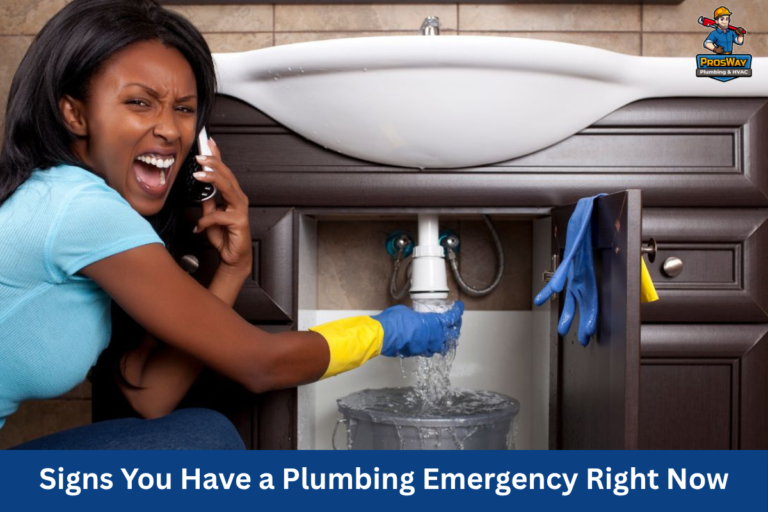
If you see water gushing from a pipe, spraying from a joint, or pooling rapidly on your floor, you have a burst or cracked pipe. This is the highest-urgency emergency on this list. A single burst pipe can release hundreds of gallons before you even locate the shut-off valve. Your basement can flood in minutes. Turn off your main water supply immediately and call a licensed plumber; do not attempt a DIY patch on a pressurized line.
Sign 2: Complete Loss of Water Pressure Across Multiple Fixtures
A weak or nonexistent flow from a single tap might just be a clogged aerator. But when water pressure drops across multiple fixtures, your kitchen tap, bathroom faucet, shower, and toilet fill valve all run low simultaneously.
This points to a broken main line, a failed pump, or a serious blockage deep in your system. This warrants an emergency call, especially if the pressure loss happened suddenly with no prior warning.
Sign 3: Sewage Odor or Backup in Sinks, Toilets, or Tubs
A backed-up drain that releases a sewage odor is not a nuisance; it is a health hazard. When your toilet gurgles, your sink drains slowly, and a smelly, murky liquid begins rising in your tub simultaneously, your main sewer line is almost certainly blocked or collapsed.
Raw sewage backup introduces harmful bacteria and toxic gases like hydrogen sulfide directly into your home. Do not use any fixture until a plumber inspects your line and vent system.
Sign 4: Water Stains Spreading on Ceilings or Walls (Hidden Leak)
A wet, discolored, or stained ceiling patch is never cosmetic. It means a pipe, joint, or seal above that surface is leaking, possibly has been for days. If the stain is warm to the touch or actively spreading, the leak is live and worsening. Soggy drywall collapses under its own weight.
A hidden leak left unchecked will corrode the surrounding framing, breed mold inside your wall cavity, and eventually cause structural failure.
Sign 5: No Hot Water + Sounds or Pooling Near the Water Heater

A water heater that suddenly stops delivering hot water while also producing banging, hissing, or whistling sounds is sending a clear distress signal. If you also notice pooling water or a damp floor around the tank, the unit may have a failed gasket, a cracked tank, or dangerous pressure buildup.
A pressurized tank with a faulty pressure gauge or damaged seal can rupture. Turn off the heater’s shut-off valve and do not attempt to inspect the tank yourself.
Sign 6: Banging, Hissing, or Gurgling Sounds Inside Walls or Floors
Noisy pipes are not always an emergency, but certain sounds are. A banging pipe often signals water hammer, caused by a sudden pressure surge through the line. A hissing or whistling sound from inside a wall can indicate a cracked pipe losing pressure.
A gurgling drain points to a blocked vent or a clog deep in your sewage system. When these sounds appear suddenly, are loud, or come with wet spots on the wall or floor, call a plumber immediately.
Sign 7: Rotten Egg or Sulfur Smell Near Pipes or Appliances
A sulfur or rotten egg odor near your pipes, water heater, or any fixture is one warning sign you must never ignore. This smell typically indicates one of two things: a gas leak near a gas-powered appliance, or hydrogen sulfide rising from a dry or backed-up sewer trap.
Both scenarios are dangerous. If the odor is strong, leave your home immediately, avoid using any switches or open flames, and contact both your gas provider and an emergency plumber.
What To Do Right Now While You Wait for a Plumber
Calling a plumber is step one. But the ten minutes between that call and their arrival can determine how much damage your home sustains. These steps are fast, safe, and require no tools or plumbing knowledge.
Locate and Turn Off Your Main Shutoff Valve
Your main shut-off valve is the single most important piece of hardware in a plumbing emergency. It controls water flow from the municipal line into your entire home. Turning it off stops a burst pipe, a flooded basement, and an overflowing fixture from getting worse immediately.
Here is where to find it:
- Basement or utility room: Check along the front wall closest to the street. The shut-off is usually near the water meter.
- Crawl space: Look near where the main line enters the foundation.
- Outside the home: Some homes have a curb-side shut-off near the meter box, operated with a meter key.
Turn the valve clockwise until it stops. Once closed, open a tap on the lowest floor to release residual pressure in the line. This small step prevents a dripping joint from becoming a flooded room.
What NOT to Do: Common Mistakes That Worsen the Damage
In a plumbing emergency, the wrong move can turn a manageable leak into a structural disaster. Avoid these mistakes without exception.
- Do not ignore a gurgling toilet or slow drain and assume it will clear on its own. A backed-up sewer line will not self-resolve.
- Do not use chemical drain cleaners on a blocked or backed-up drain. They can corrode already damaged pipes and worsen the clog.
- Do not run water from any tap, flush any toilet, or use any fixture if you suspect a sewage backup or broken main line.
- Do not attempt to patch a burst or cracked pipe with tape or sealant under live pressure. A pressurized line requires a licensed plumber.
- Do not turn the water heater back on if the tank is pooling water or making noisy, hissing, or whistling sounds; you risk a rupture.
- Do not delay calling a plumber because the leak appears to have slowed or stopped. A trickling leak inside a wall is still actively corroding your structure.
Document Everything for Insurance Before Cleanup Begins
Before you mop, dry, or move anything, document the damage. Your insurance claim depends on visual evidence taken before cleanup begins. This step takes five minutes and can save you thousands.
Take clear photos and short videos of every affected area: the wet floor, the stained ceiling, the soggy wall, the damaged fixture, the burst pipe, and any pooling water. Note the time the damage was discovered.
If your water meter was running abnormally, photograph the reading. Save all communication with your plumber, including timestamps and written estimates. Insurers require proof that the damage was sudden and accidental, not the result of a slow, ignored leak over months.
Plumbing Emergencies in Morris County, NJ: Local Factors That Make It Worse

Plumbing emergencies do not happen in a vacuum. In Morris County, New Jersey, two well-documented local factors consistently push routine plumbing problems into full emergency territory faster than homeowners expect.
Freeze-Thaw Cycles and Pipe Bursts Are Common in Morris County Winters
Morris County sits in a climate zone where winter temperatures regularly drop below 20°F. When water inside an uninsulated pipe freezes, it expands with enough force to crack or fully burst the pipe, whether it is copper, PVC, or galvanized steel.
The real danger, however, is the thaw. A frozen pipe shows no symptoms until it thaws and the pressurized water rushes through the crack. By that point, your basement may already be flooding.
Pipes located in exterior walls, unheated crawl spaces, and garage lines are the highest risk. If you notice a tap running weak or dry during a cold snap, treat it as a frozen pipe emergency; do not wait for it to thaw on its own.
Older Housing Stock in Morris County: Why Pre-1980 Homes Face Higher Risk
A significant portion of Morris County’s residential properties were built before 1980. These homes commonly contain galvanized steel pipes, which corrode from the inside out over decades.
The result is a slow, invisible process: rusted scale builds up inside the line, restricting flow and producing discolored, murky water at the tap. Eventually, a corroded pipe cracks or collapses entirely, often without any prior visible warning at the surface.
Older homes also frequently rely on outdated joint and seal materials that degrade over time. A seal that held for 40 years can fail overnight, turning a hidden pipe into a leaking one inside your wall or floor. If your home was built before 1980 and you have never had a plumbing inspection, the risk of an undetected damaged pipe is significantly higher than you may realize.
Don’t Wait: Call Prosway’s 24/7 Emergency Plumbing Team in NJ!
A burst pipe does not wait for business hours. A backed-up sewer line does not care that it is 2 a.m. on a Sunday. Plumbing emergencies are, by definition, unscheduled, and the damage they cause moves fast.
Every hour of delay between a flooded basement and a licensed plumber on-site is an hour of water soaking into your floor joists, corroding your walls, and seeding mold inside your structure.
Prosway’s emergency plumbing team serves Morris County and surrounding areas in New Jersey, 24 hours a day, 7 days a week. Whether you are dealing with a burst pipe flooding your basement, a backed-up sewage line, a cracked water heater pooling water across your utility room floor, or a frozen line, Prosway dispatches licensed, fully equipped plumbers who arrive ready to diagnose and repair, not just assess.
Here is what you get when you call Prosway for an emergency:
- Rapid response – licensed plumbers dispatched immediately, day or night
- Full system diagnostics – from the main shut-off valve and water meter to every fixture, drain, and vent in the affected area
- Transparent pricing – written estimates before any work begins, with no surprise charges after the job
- Expert repairs – on burst pipes, blocked drains, failed water heaters, damaged seals, corroded joints, overflowing toilets, and leaking lines across all pipe materials
Do not let a trickling leak become a flooded home. Do not wait for a gurgling drain to become a sewage backup. Do not ignore a whistling pipe or a stained ceiling until the drywall gives way.
Call Prosway now at (862) 260-5870 or visit proswaynj.com to reach a live emergency plumber in Morris County, NJ, right now.