Skip to content


A steady flow of hot water makes showers relaxing, dishwashers efficient, and laundry cycles smooth. When you notice low water pressure water heater, it doesn’t always mean the system has failed. In many cases, the cause is something simple that can be addressed quickly. Knowing the difference matters. Low pressure isn’t just an inconvenience; it can signal deeper problems. The good news: most causes are identifiable and fixable with the right steps.
This guide explains what low water pressure really means, the most common causes, and when to try quick fixes versus calling a professional plumber.
What “ Water Heater Low Pressure” Really Means?
Low water pressure is often confused with low flow. Pressure refers to the force of water moving through pipes, while flow measures how much water reaches your fixtures. A clog or blockage may reduce flow even if the house pressure is technically normal.
Hot water problems often look like water heater failure, but the issue could be elsewhere. For example, if your cold water lines are strong but hot water trickles, the restriction is likely in the water heater tank, tankless unit, or hot-side piping.
If both hot and cold are weak, the cause could be a faulty pressure regulator, main shutoff valve, or corroded galvanized pipes.
Signs it’s limited to your water heater include:
- Weak hot water at every faucet, while cold water is fine.
- Fluctuating hot water flow that stabilizes when switched back to cold.
- Noisy heater operation (popping, hissing) suggests sediment buildup restricting hot water delivery.
Common Causes of Low Water Pressure in Water Heaters
Several issues can reduce hot water flow. Some are minor, others point to aging equipment or systemic plumbing problems.
Sediment Buildup in the Tank
Over time, minerals like calcium and magnesium settle to the bottom of a storage water heater. This layer of sediment acts like insulation, trapping heat and forcing the unit to work harder. It also reduces the effective capacity of the tank, so you get less hot water before it runs cold.
If sediment migrates toward the outlet pipe or drain valve, it can partially block flow, causing weak hot water pressure at faucets and showers. In severe cases, sediment also causes rumbling, popping, or hissing sounds.
Mineral Scaling Inside Pipes
Hard water accelerates the formation of mineral scale, especially in homes without a softener or filtration system. Scaling inside copper or galvanized pipes narrows the diameter of hot water lines, making pressure drop noticeable at fixtures.
Also, tankless units can suffer from scale buildup inside the heat exchanger coils. Scale is harder to fix once it hardens, often requiring professional descaling or partial pipe replacement.
Partially Closed Shut-Off Valve
Every water heater has a cold-water shut-off valve to control the incoming supply. If this valve is only partially open sometimes after maintenance or a bump during storage, it restricts water flow before it even enters the heater.
The result looks just like low pressure, but it’s a mechanical restriction rather than a failing heater.
Faulty Pressure-Reducing Valve (PRV) or Expansion Tank
A pressure-reducing valve regulates incoming municipal water pressure to safe household levels. When a PRV begins to fail, it can reduce water flow across the entire system.
Because hot water has to pass through the heater, the problem is often noticed first at hot taps. Similarly, a faulty or waterlogged expansion tank in a closed system can upset pressure balance, leading to weak or inconsistent flow on the hot side.
Corroded Pipes in Older Homes
Homes with older galvanized steel or iron pipes often suffer from internal corrosion. Rust narrows the pipe diameter, and flakes can break loose, further restricting flow.
This doesn’t just lower pressure, it also discolors hot water with orange or brown rust particles. Once corrosion is advanced, the only lasting solution is partial or full re-piping.
Clogged Aerators or Showerheads
Fixtures themselves can exaggerate the issue. Aerators on faucets and mineral buildup in showerheads collect debris, sand, and rust from the water heater tank or pipes. A clogged aerator can make pressure look poor even when the system is fine upstream.
Start Here: Is It Really the Water Heater?
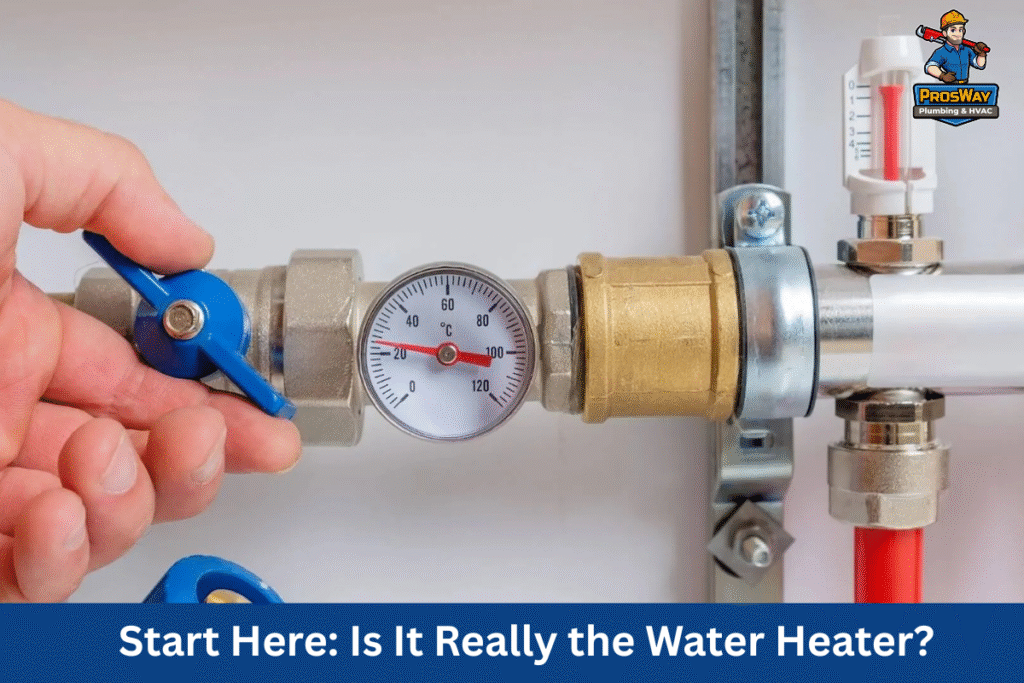
Before blaming the heater, run a few quick checks. These steps help you confirm if the issue lies with the unit or with your plumbing system.
- Compare hot vs. cold at the same faucet: If cold water has a strong flow but hot water is weak, the water heater or hot-side piping is the culprit.
- Check multiple fixtures: Test the kitchen sink, bathroom sink, and shower. It’s systemic if all hot taps are weak. If only one fixture is affected, the problem may be a clogged aerator or showerhead.
- Measure house pressure with a gauge: Attach a gauge to a hose bib. Normal household pressure should fall between 50–60 psi. The pressure-reducing valve or city supply could be at fault if readings are low across the board.
- Check shut-off and supply valves: Sometimes, a partially closed inlet valve near the heater restricts flow.
Quick Fixes You Can Try
A few simple actions may restore performance when tests suggest the problem is with the water heater:
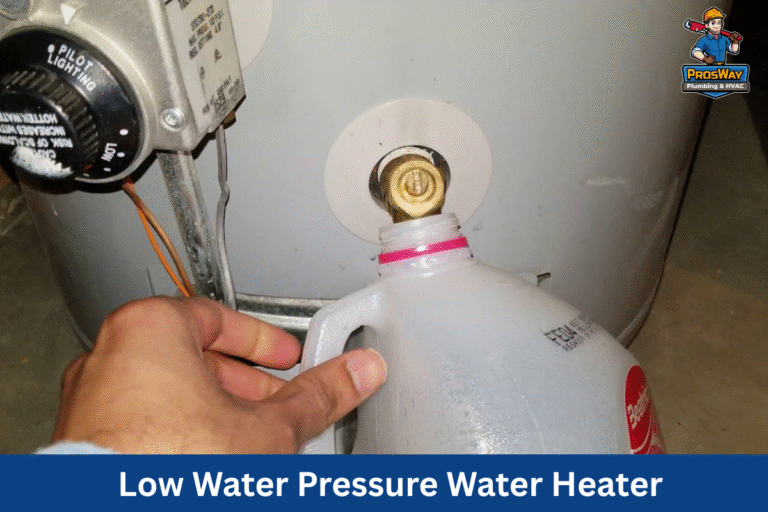
- Flush the tank: Sediment buildup inside a storage tank often reduces flow and causes popping or rumbling. Attaching a garden hose to the drain valve and draining a few gallons can dislodge debris.
- Clean faucet aerators: Sediment and rust particles often get trapped at fixture outlets. Unscrew, rinse, and reinstall them.
- Adjust water heater valves: Make sure the inlet and outlet valves are fully open.
- Replace clogged supply lines: Flexible hoses between the heater and piping can kink or clog with scale. Replacing them is inexpensive.
- Tankless inlet filter: Tankless models include a small mesh screen at the inlet. Shut off the water, remove the filter, rinse debris, and reinstall.
- Run a flow test: Turn on two hot fixtures. The restriction may be in a downstream fixture or branch pipe if shutting one improves flow at the other.
- Check house pressure settings: If your home has a pressure regulator, set it to 50–60 psi. Adjustment often requires a professional.
Important: Stop troubleshooting and call a licensed plumber immediately if you smell gas, see rust flakes, or hear loud banging inside the unit.
Prevention That Actually Helps
Preventing low water pressure starts with regular maintenance and smart upgrades.
- Annual flush for tank heaters: Sediment settles at the bottom, blocking water flow and insulating heat. A yearly flush through the drain valve removes debris.
- Yearly descale for tankless models: Mineral deposits coat the heat exchanger and restrict flow. Descaling with a pump kit and vinegar keeps efficiency high.
- Set outlet temperature around 120°F: Higher settings accelerate scale buildup, while safe temperatures slow it down.
- Install a water softener or scale filter: Homes with hard water benefit from treatment systems that reduce calcium and magnesium.
- Replace clogged aerators: Upgrading to full-flow models restores fixture performance.
- Maintain house pressure at 50–60 psi: Use a PRV and, in closed systems, pair it with an expansion tank to prevent pressure swings.
- Log maintenance dates: Keeping track of service history helps catch recurring problems early.
When to Call Pros?
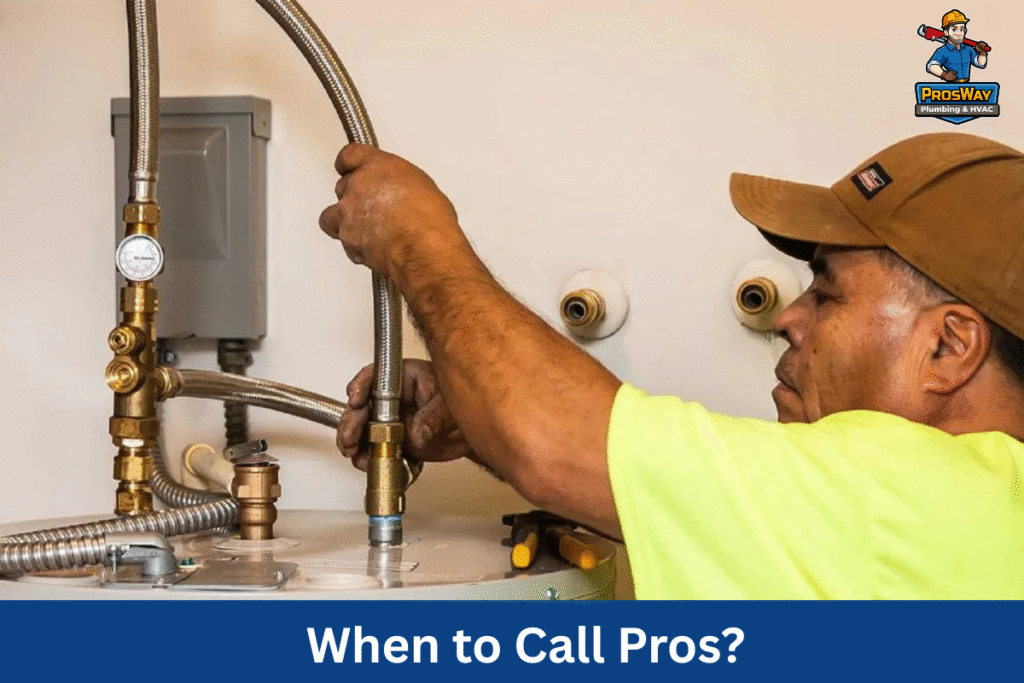
Not every low water pressure problem can be solved with a quick flush or simple adjustment. It’s time to bring in a licensed plumber like Prosway Plumbing and HVAC if the hot water side of your entire home feels weak, even after basic checks.
The same applies if your tankless unit still struggles after cleaning the inlet screen and performing a flush, or if you notice rust flakes, brown water, or recurring scale, signs of internal corrosion.
Moreover, homes with old galvanized pipes or a failing pressure-reducing valve (PRV) also need professional attention. In urgent cases, same-day diagnostics and repair may be the only way to restore full pressure.
Plumbers use advanced tools like inspection cameras, flow meters, and pressure gauges to pinpoint the source of restrictions. From repairing faulty fittings to replacing corroded lines, or even recommending full re-piping when systems are too deteriorated, they provide solutions that go beyond temporary fixes.
Conclusion
Low water pressure in your water heater is a common issue, but the reasons can range from simple sediment buildup to deteriorating pipes. While some fixes are quick DIY tasks, others require specialized tools and professional expertise. Acting early restores the comfort of strong, steady hot water and prevents long-term damage and costly repairs.
Get Your Hot Water Flowing Again!
Call us now at (862) 260-5870 or Book Online today for expert low water pressure diagnostics and repair. Even if it’s flushing sediment, replacing faulty valves, or upgrading an aging system, our licensed plumbers deliver safe, reliable service across Northern New Jersey. Don’t settle for weak showers or slow fixtures; get your hot water running at full pressure today.